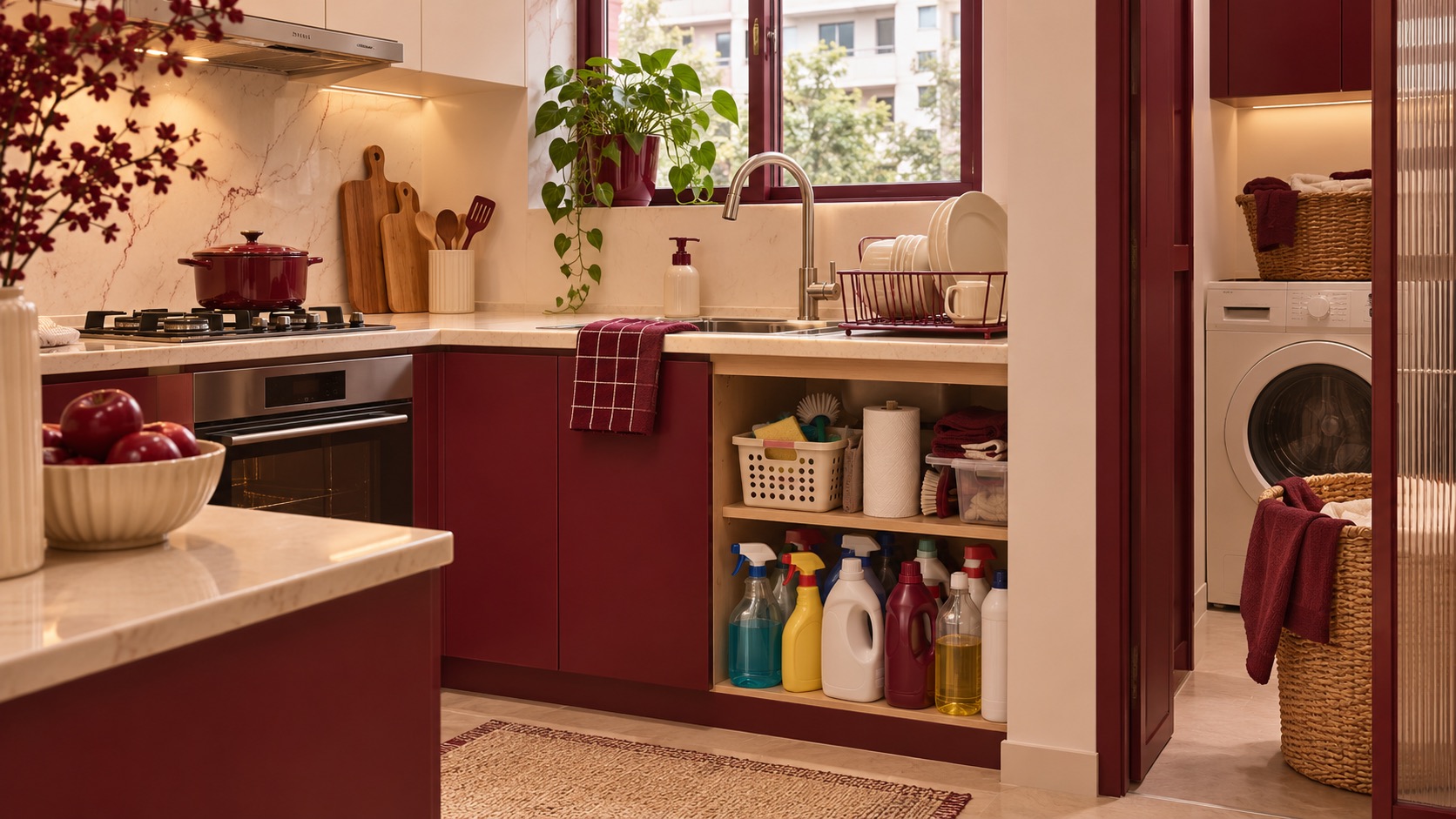
Why does a convenient low shelf become a problem?
A small kitchen often makes the under-sink or laundry-edge shelf feel like the only place for sprays and detergents. But a low open shelf can put household products within a child's reach. In the opening illustrative scene, cleaning bottles share a low niche with ordinary supplies; this is a design problem to assess, not a photographed home or incident.
The US Poison Help program recommends keeping household cleaners and potentially poisonous substances in locked cabinets or out of children's reach, and keeping products in their original containers. A cabinet location must also work with the household's daily cleaning routine, so bottles are returned promptly rather than left on the counter.
Map what is stored before changing the cabinetry
List the actual products, their container sizes, where they are used, and who needs access. Separate products that need secured storage from cloths, brushes and other ordinary tools. Do not decant cleaners into attractive jars or drink bottles for a tidier photograph; original labeled containers are essential for safe identification.
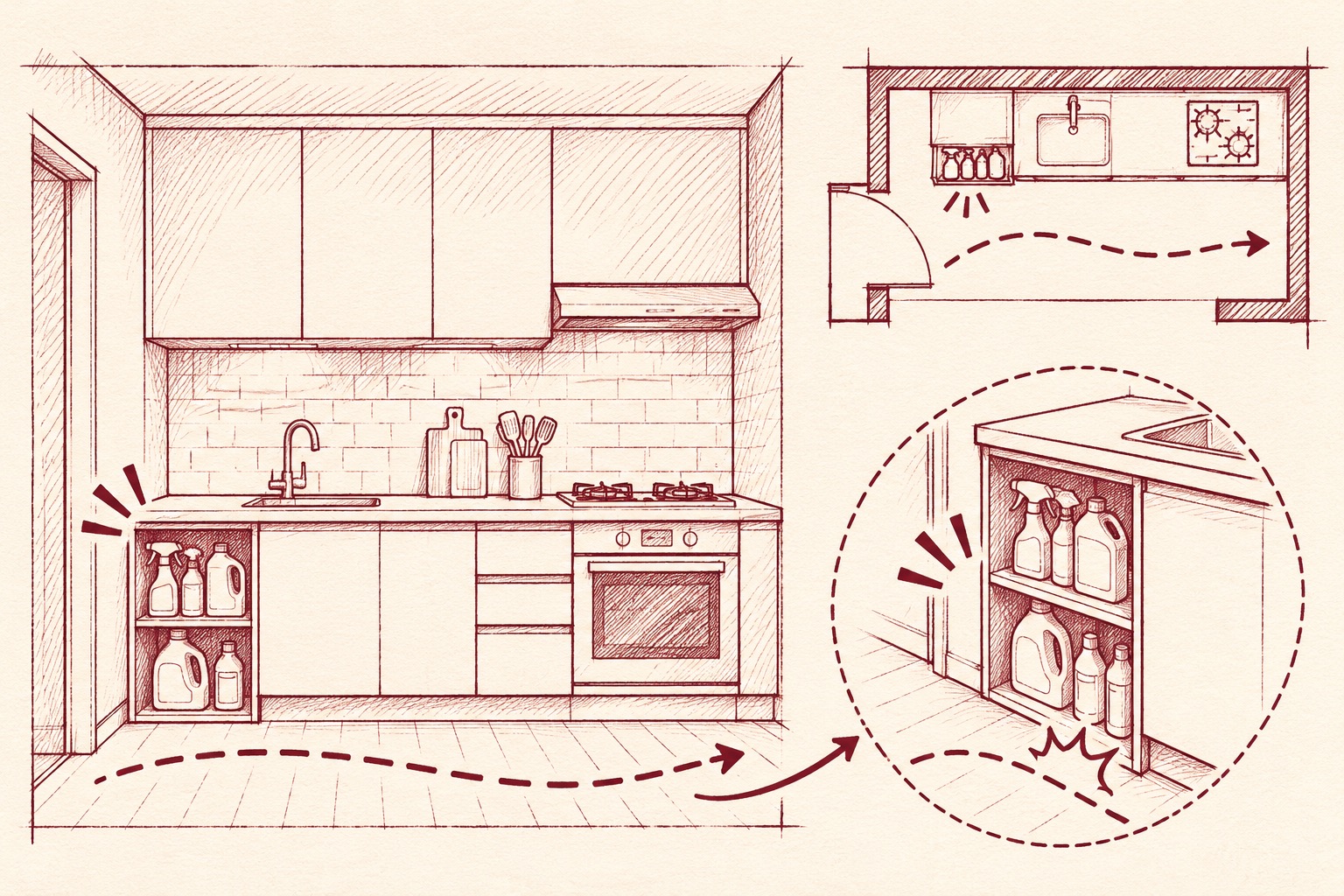
The first explanatory sketch is unmeasured. It shows a low open shelf beside a normal kitchen route. Its graphic marks point to the storage issue, not a tested reach distance or a code-compliant plan.
The safer storage plan is the one the household can follow after every clean.
Design a dedicated secured zone
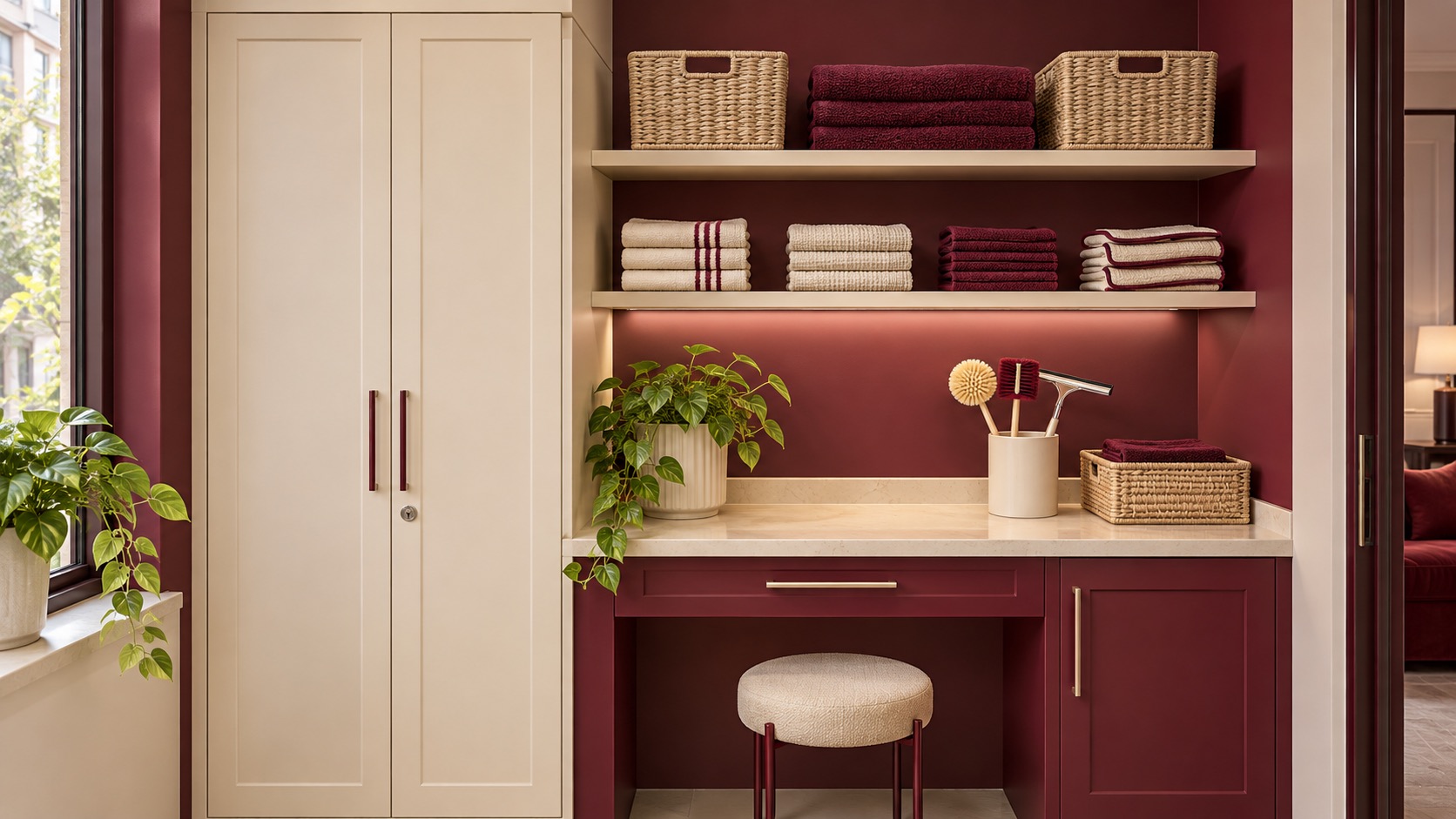
A lockable cabinet can be placed in a utility wall or another location that is out of children's reach, with enough interior space for products to stand upright in their original containers. Keep the key or access method under adult control. Check the actual wall, cabinet fixing, product labels, and local requirements before building; a rendered lock symbol cannot establish the security of installed hardware.
Give harmless cloths and cleaning tools a separate, more convenient place. A small work surface nearby can support the routine of taking out a product, using it according to its label, and returning it to secured storage. The middle image is an unbuilt interior concept, not a guarantee of child safety.
Keep the layout clear and the advice precise
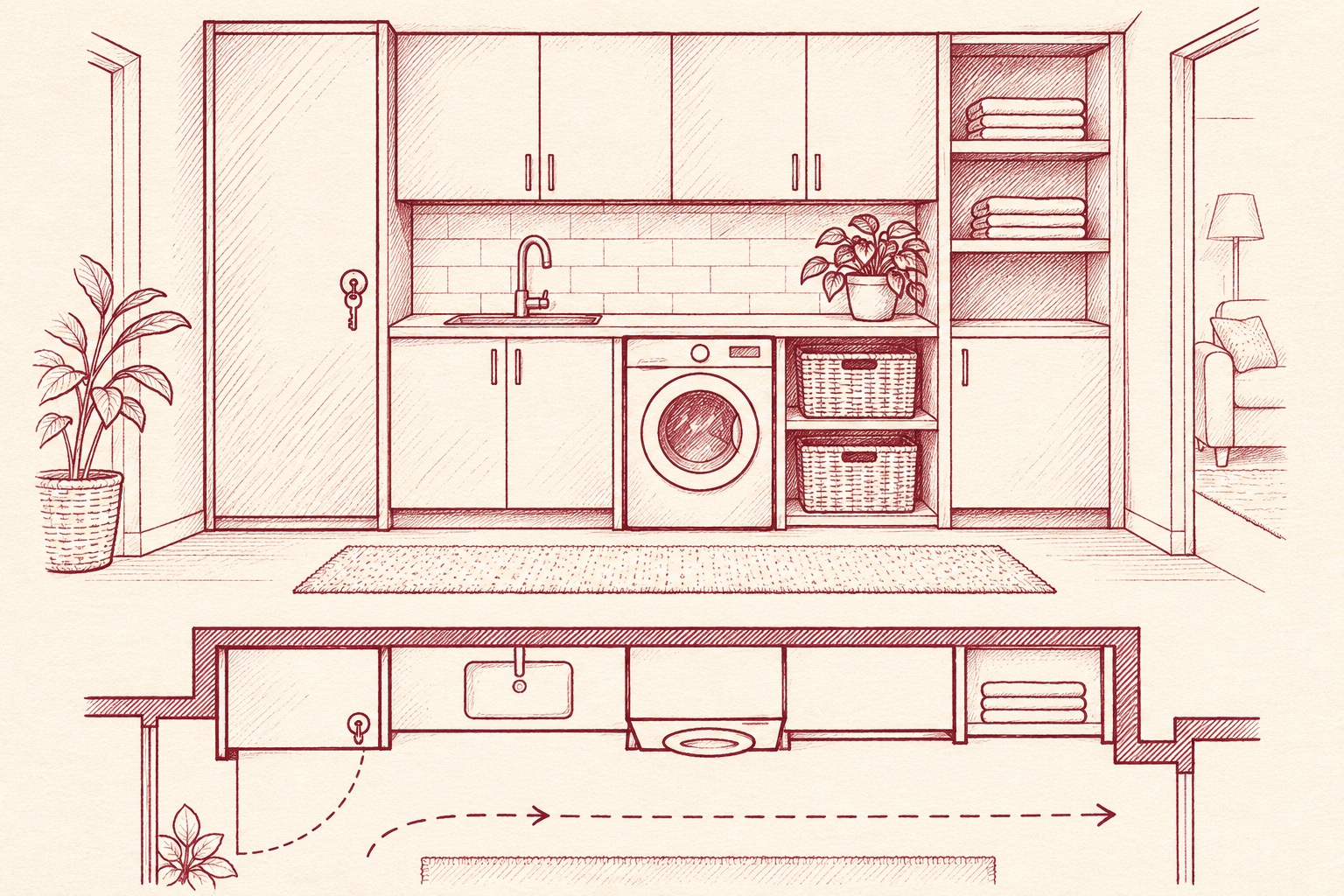
The second unmeasured sketch places a lockable tall cabinet along a utility wall, with separate open shelves for cloths and a clear route in front. It is an explanatory concept rather than a measured plan, product specification, permit drawing or construction document. Its closed cabinet deliberately does not display products as an invitation to leave them accessible.
Poison Help also advises against storing cleaners in food containers and says to follow the product label. Storage design cannot replace supervision, safe use or the product's instructions. If a household includes children, discuss the storage plan with everyone who uses the space and revisit it as routines change.
What can I do this week?
Move cleaners away from a low open shelf now and place them in an appropriate locked or otherwise inaccessible location. Keep each in its original container. Then measure the available cabinet space and photograph the current route and work surface before commissioning any built-in solution. A renter can ask what non-permanent secured storage is permitted before fixing anything to a wall.
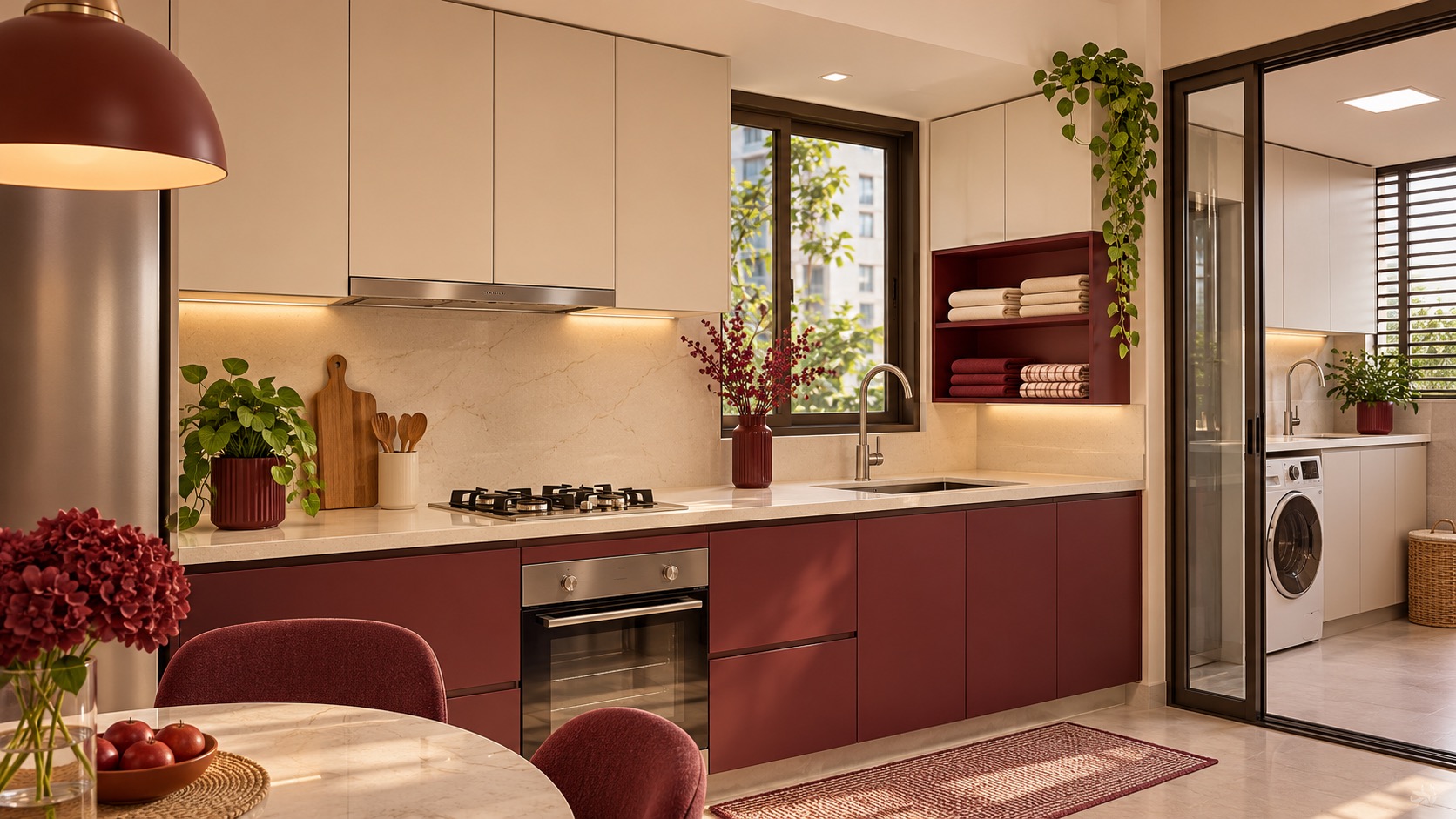
The final render shows a calm unbuilt kitchen after reorganization; its closed doors do not verify that products inside are locked or out of reach. Artimist Productions can compare interior layouts and storage concepts for a real measured home. Begin with the studio's interior design work and confirm any final safety details with the relevant product guidance and qualified local professionals.

0 published responses