Bathroom Remodel Layout Ideas That Work
A bathroom remodel is often described as a style project, but the hardest decisions are usually spatial: whether a tub can become a shower, where the vanity should go, how the door opens and whether the room can gain storage without becoming difficult to use. Layout should be resolved before finishes are selected.
Document the existing bathroom accurately
Record wall lengths, ceiling height, door and window positions, plumbing fixtures, vents, radiators, niches and any level changes. Photographs should show every wall and the relationship to adjacent rooms.
Existing plumbing locations do not make change impossible, but moving drainage, ventilation or supply lines can affect cost and feasibility. Those implications should be understood early.
Test fixtures with real dimensions
Use the actual or likely sizes of the vanity, toilet, shower, tub and storage rather than generic symbols. Check door swings, shower access, cleaning space and the route through the room.
A larger shower is not an improvement if it creates a tight entrance, weak vanity storage or uncomfortable clearances elsewhere.
Compare priorities, not only appearances
One option may keep plumbing mostly in place, another may improve accessibility and another may prioritize storage or a separate bath. Label the tradeoff behind each layout so the decision is understandable.
If the bathroom connects to a bedroom or dressing area, review privacy, lighting and circulation across the whole suite rather than treating the room in isolation.
Visualize materials after the plan works
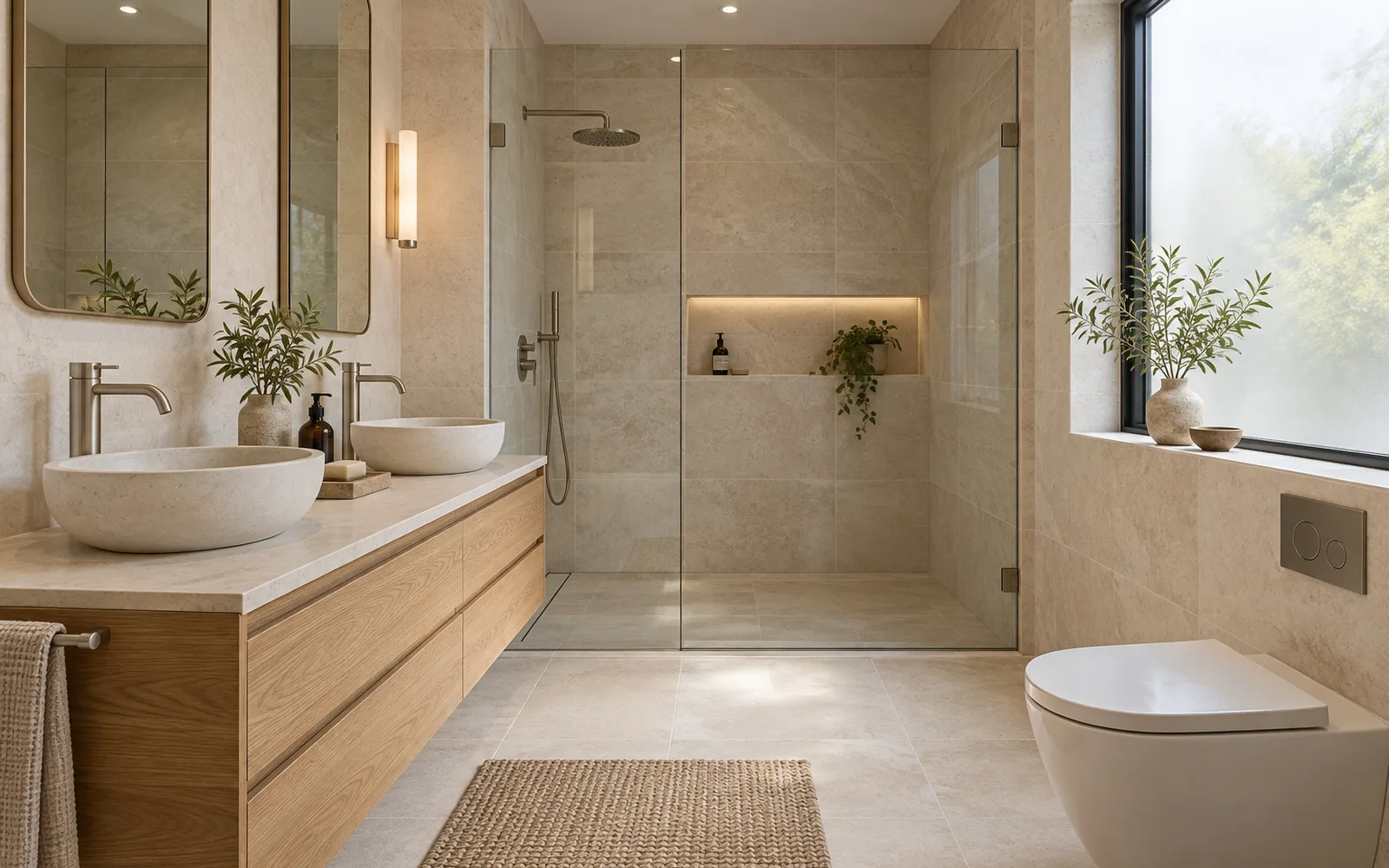
Once the layout is credible, 3D views can compare tile scale, vanity proportions, mirrors, lighting and the amount of visual enclosure created by glass or walls.
Before construction, the selected layout still needs coordination with waterproofing, structure, plumbing, electrical work, ventilation and any applicable local requirements.
Key takeaways
- Measure the existing room and plumbing conditions.
- Use real fixture dimensions and clearances.
- Make the tradeoff behind every option explicit.
- Resolve layout before spending time on finishes.