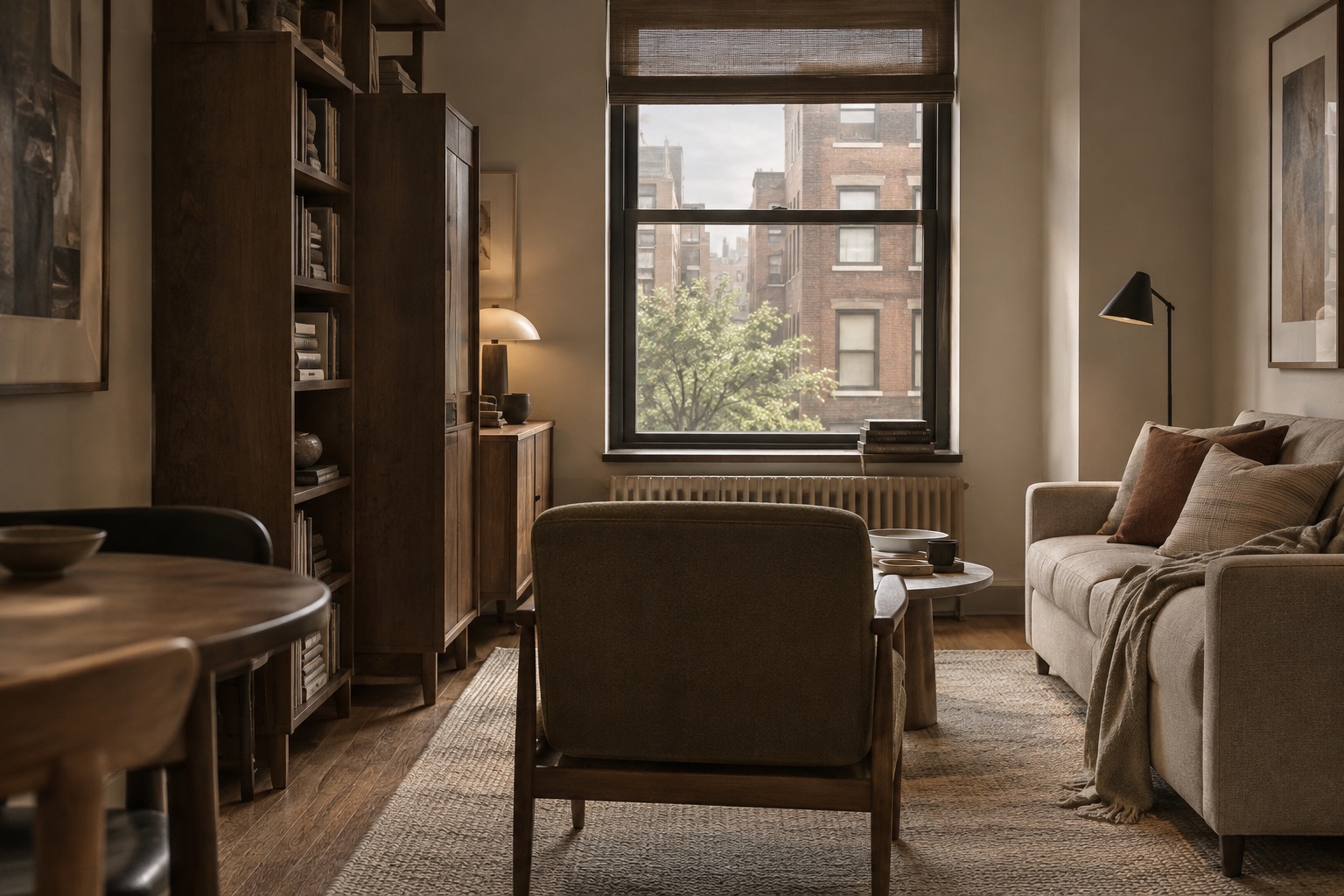
Begin with the nature you already have
A home without a garden can still feel more connected to nature if one useful outdoor view becomes part of daily life. In a compact urban room, that may be a street tree, changing sky or a small planted courtyard visible from a chair. Start by protecting the view, then add modest planting and a place to pause near the window. The aim is a usable everyday relationship, not a simulated garden or a promise of health benefits.
Stand and sit in the places you already use. Is the tree visible only while standing at the glass? Does a tall shelf or the sofa back block it? Is glare so strong that the blind stays shut? These are design questions that a plan and a few viewpoint studies can answer before anything is built.
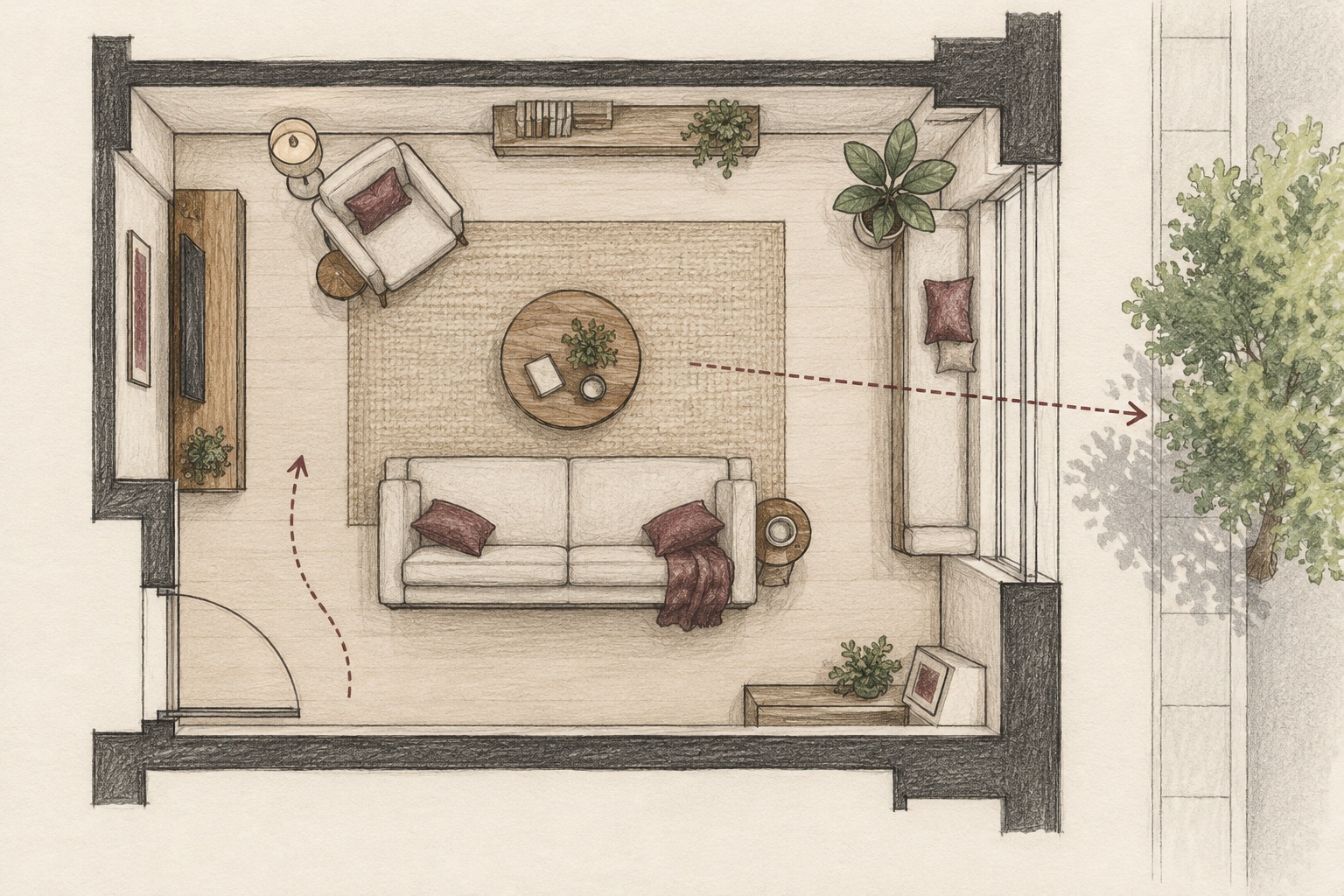
Make the view work from a seated position
Move tall storage away from the window if the room allows, and test a low seat or compact chair that looks outward without obstructing circulation. The view need not be dramatic. A framed glimpse of one tree or a changing sky can be more useful than a larger window hidden behind furniture.
A 1984 study by Roger Ulrich compared hospital patients with different window views and reported differences in recovery measures. That was a small, specific hospital study; it does not show that a window bench will treat stress or improve health in an ordinary apartment. Here it is a reason to take the quality of a view seriously, not a clinical claim about this concept.
A connection to nature can begin with one honest view that people can actually use.
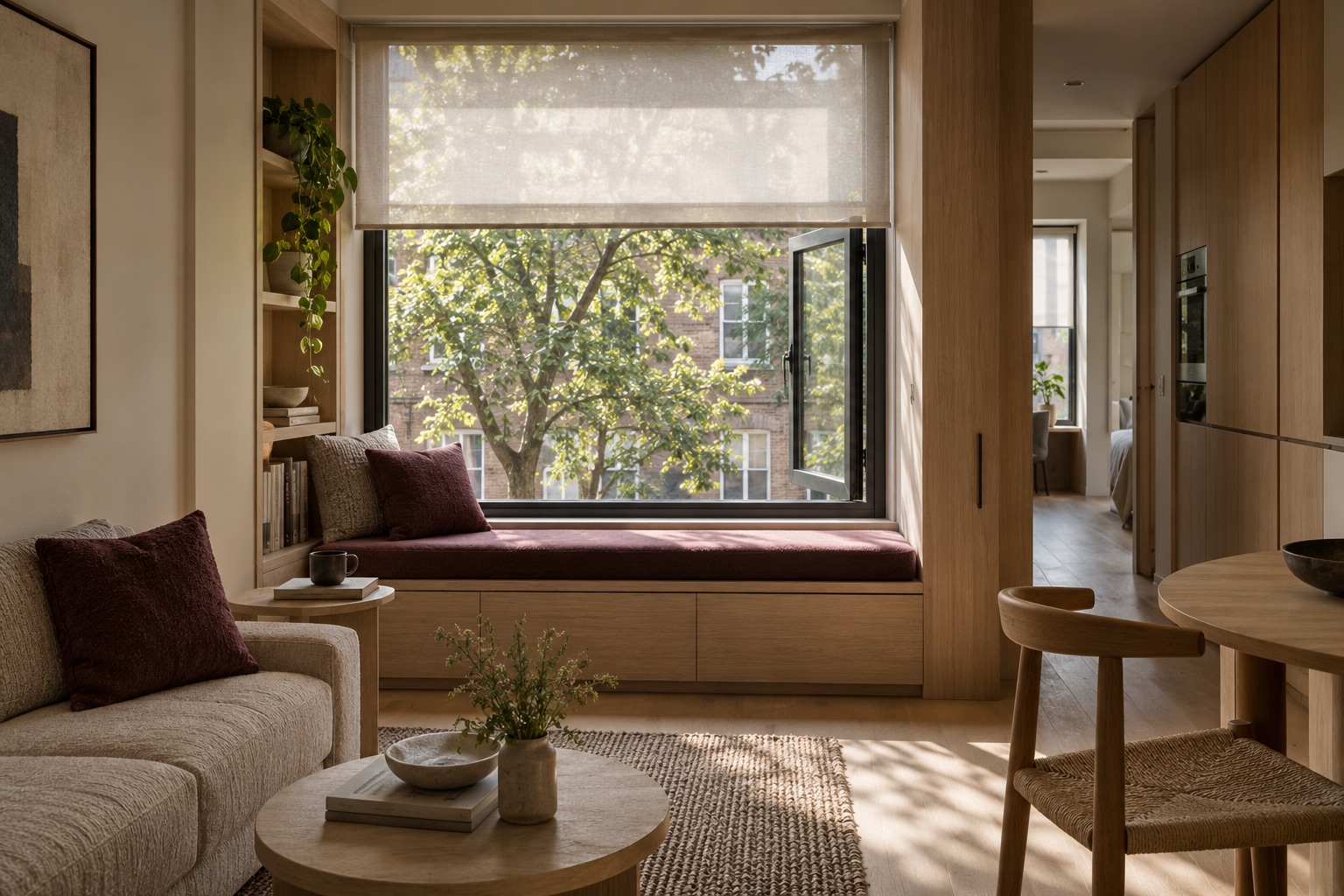
Use planting as a real object, not a green filter
One manageable plant can bring a living texture close to the seat, especially where outdoor green is scarce. Choose a species suited to the actual light, moisture and household; check pet and child safety where relevant, and keep the pot on a stable surface. Do not cover the only window with shelves of foliage or block an operable opening.
A small randomized crossover study of young adults compared interacting with indoor plants with a computer task and found short-term differences in stress-related measures. That does not establish that any particular plant or layout changes mental health at home. Nor should houseplants be marketed here as an air-cleaning system; ventilation and source control remain separate indoor-air decisions.
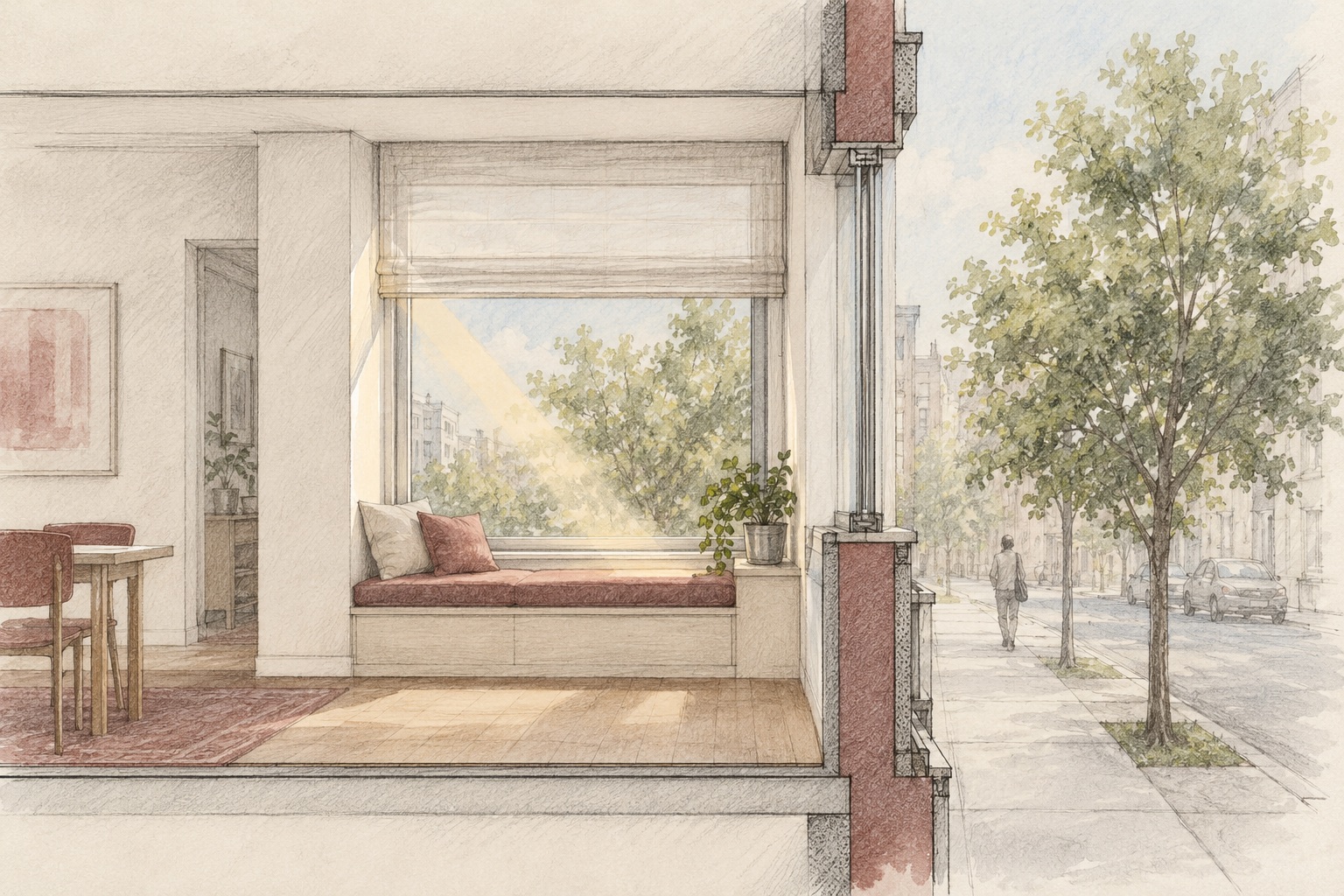
Shape a small threshold for pause
A low window seat or movable chair can turn the edge of a room into a small threshold between interior life and the street outside. Keep the seat comfortable, give it a modest reading light for dusk and make a place for a book or cup. An adjustable shade can manage direct sun while preserving the view when conditions allow.
The section sketch shows a possible relationship among seat, shade, window and tree. It is not a measured proposal for a particular property. Any built-in bench, altered window or exterior attachment needs the appropriate survey and local professional review; renters may get much of the spatial benefit with movable furniture alone.
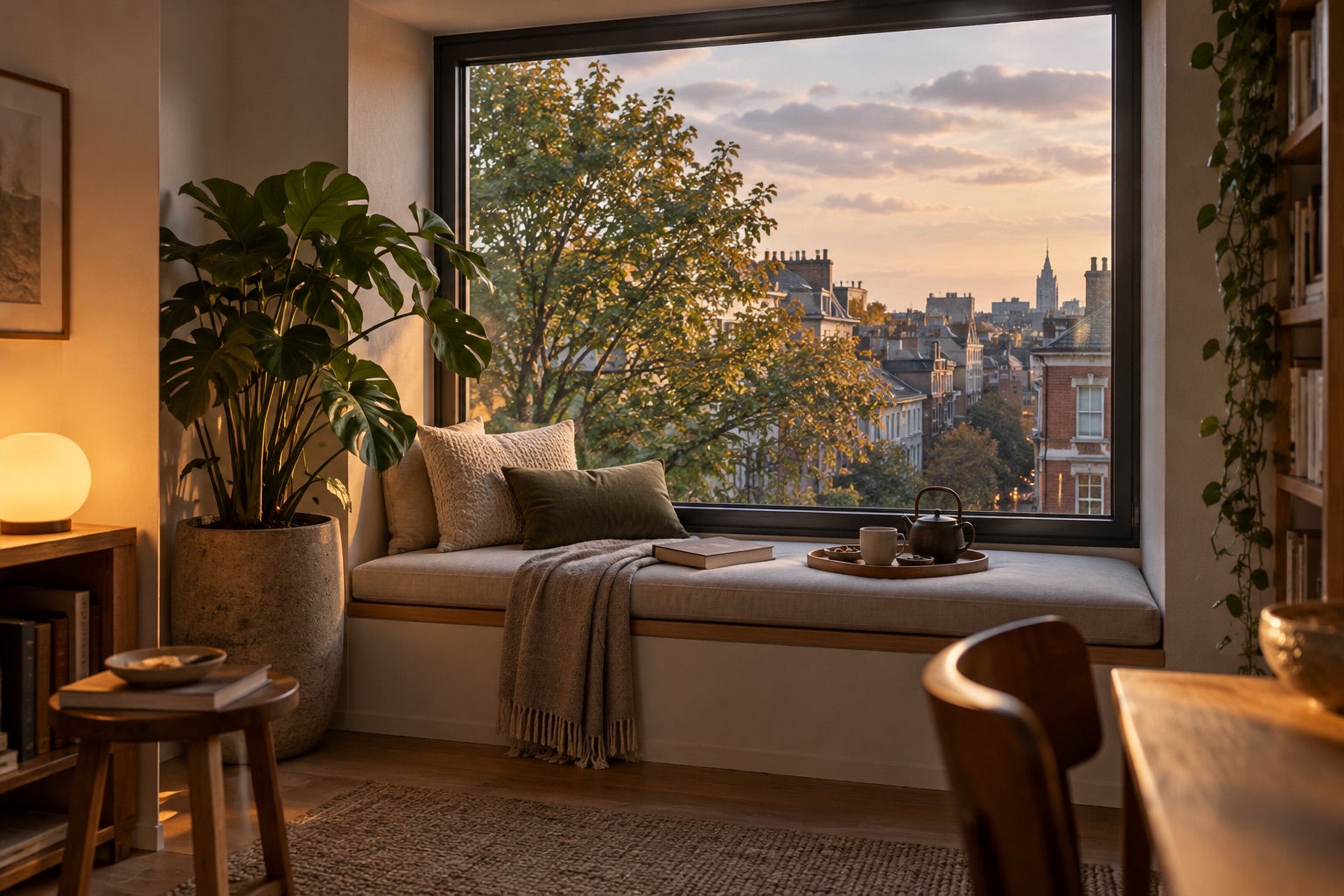
Test the scene across the day
Before choosing joinery or planting, look at the room on a bright morning, at the time you normally sit there and near dusk. Note whether the tree is visible from the seat, whether sun becomes uncomfortable, whether privacy is needed from facing buildings and whether the route through the room remains clear. Preserve necessary ventilation and safe window access.
The U.S. Department of Energy describes daylighting as a balance of window placement and interior design, including glare control. Artimist Productions can help compare a measured plan and visual options for an actual apartment. The five images in this article are AI-generated design concepts, not built-project photographs, measured daylight predictions or evidence of a therapeutic result.
0 published responses